Energy Water
Proven Impact Since 1989

Delivering measurable results across agriculture, livestock, and environmental industries
through innovative Energy Water solutions

ENVIRONMENT

Bunker C Oil and Its Impact
on Air Pollution

Bunker C oil is a residual fuel generated during the crude oil refining process and is known to emit air pollutants such as particulate matter (PM), nitrogen oxides (NOx), sulfur oxides (SOx), and carbon monoxide (CO) when combusted. Due to these characteristics, it can impact air quality in industrial settings and certain energy-use environments.

In some regions, there have been reported cases of high-sulfur bunker C oil originally intended for marine use being improperly used in industrial facilities. Compared to standard fuels, high-sulfur fuels contain elevated sulfur content, which can lead to increased emissions of sulfur oxides (SOx) and associated environmental impacts.

Accordingly, there is a growing need for diverse technological approaches aimed at reducing air pollution and mitigating environmental burdens. In this context, Energy Water is being explored as one such approach to support stability and efficiency in biological and environmental systems.

  • Even Emulsion using Energy Water
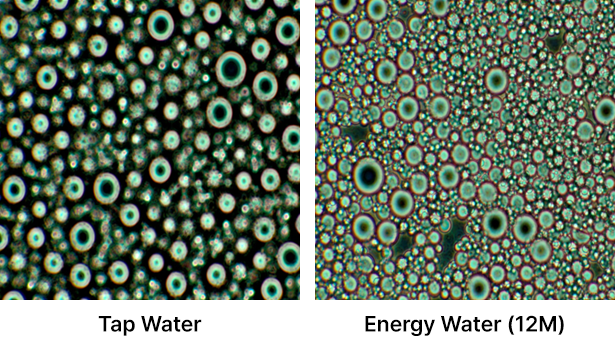
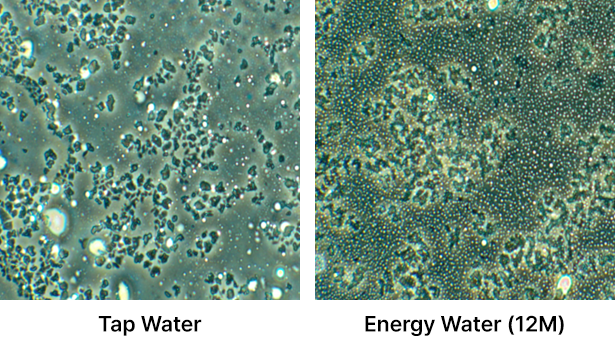
    Bunker C Oil with high Viscosity cannot form emulsion with water due to different molecule structures.
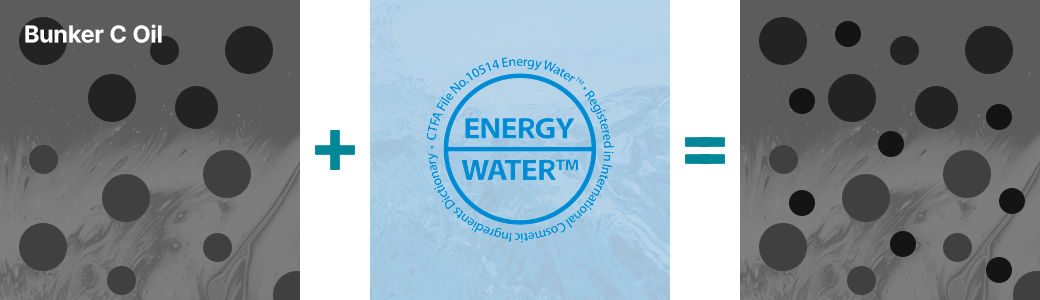
    With Energy Water, Bunker C Oil Particles can be easily form emulsion.
  • Diesel Particle Comparison
  • Bunker C Oil Particle Comparison
    Oil Distilment Layer

Improved Combustion Efficiency
using Energy Water

Bunker C Oil generates heat at the boiling point of 350℃ or higher, so it is difficult to combust.
With Energy Water, Bunker C Oil with low combustion levels can achieve complete combustion and Generate Heat Energy.

  • Bunker C Oil
  • Energy Water
  • Complete combustion

Resolving Pollution

Energy Water is being investigated for its potential to support oxidative balance and reduce environmental stress in complex biological and ecological systems. In applications related to bunker C oil–associated pollution, it represents a novel approach aimed at improving system stability and reducing environmental burden.

Environment

Energy Water is applied across environmental systems to address both air and water quality challenges, offering a sustainable approach to reducing odor-causing compounds and improving overall water conditions. Through continuous circulation and system integration, it enables effective deodorization and supports water purification without reliance on conventional chemical or microbial treatments, contributing to cleaner, safer, and more stable environments.

  • Odor Control

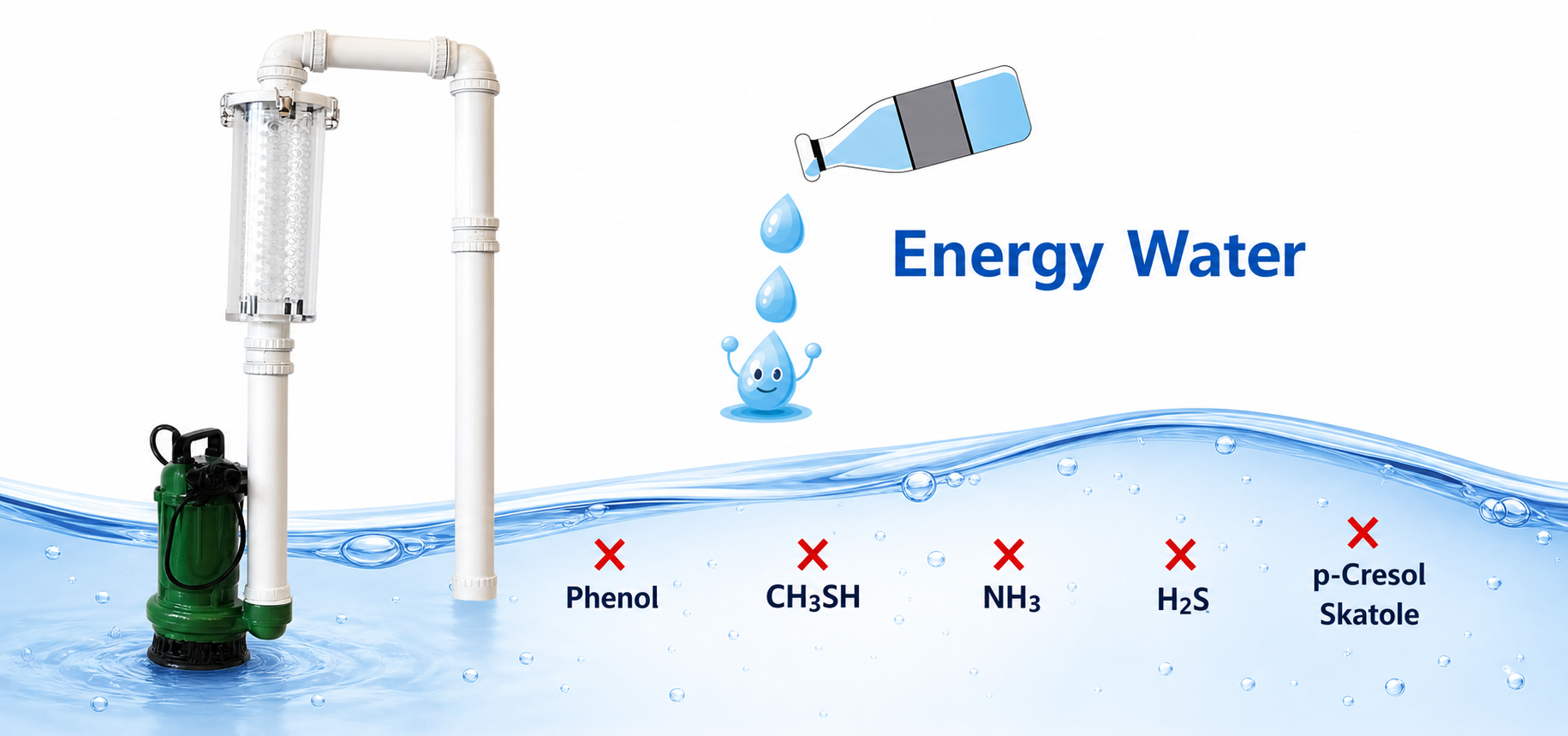
    When odor-causing compounds are diluted with Energy Water and continuously circulated within the system, volatile odor components are effectively reduced, resulting in measurable deodorization.

    Get Started Now
  • Water Purification

    For water purification, Energy Water is introduced as an alternative to microbial agents or synthetic chemical additives. Continuous circulation with Energy Water promotes water clarification and leads to a reduction in overall toxicity.

    Get Started Now

Energy Water -
Environmental Application Logic

Energy Water → A New Paradigm for Environmental Application

1. Core Scientific Platform: Energy Water (Thermodynamics-Informed Water Platform)

  • A next-generation water platform grounded in physicochemical principles
  • A new systems-level perspective on water-driven processes
  • Designed for broad applicability across biological and environmental domains

2. System-Level Interaction with Natural & Biological Systems

  • Strengthens stability and balance in water-dependent systems
  • Enhances both efficiency and adaptive resilience
  • Enables flexible and scalable deployment across diverse environments
  • Strongly aligned with ESG principles and global sustainability goals

3. Environmental & Agricultural Application Domains

  • Grassland restoration and desert rehabilitation
  • Enhanced agricultural productivity and crop system stability
  • Sustainable livestock and pasture ecosystems
  • Support for water and environmental quality

4. Societal & Ecological Outcomes — Long-Term Impact

  • Strengthened ecosystem resilience
  • Reduced environmental stress and degradation
  • Support for sustainable food and resource systems
  • Alignment with ESG principles and global sustainability goals

Energy Water
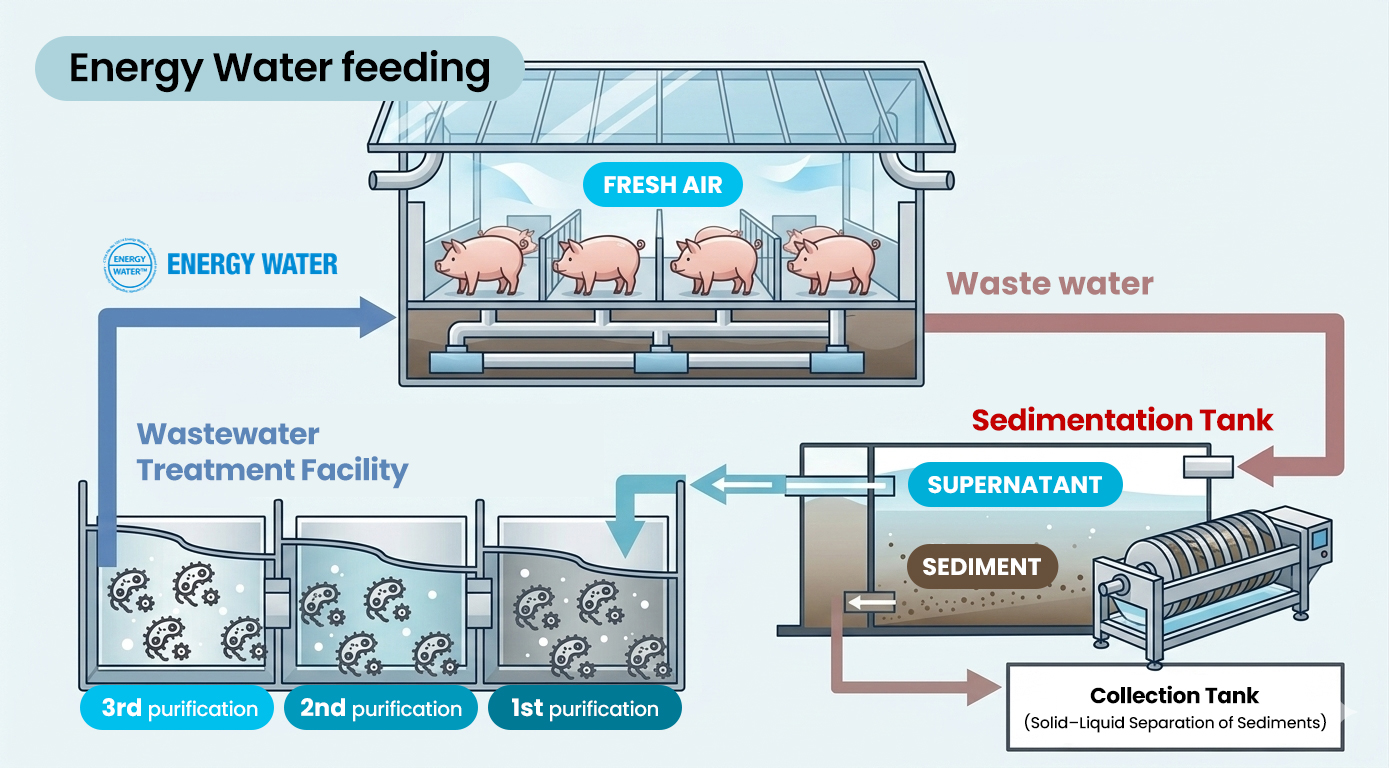
Livestock Wastewater Purification

Clarifying livestock wastewater, reducing odors, restoring nature.
Creating a cleaner livestock environment through nature-based water circulation.

Improved growth rate

  • Enhanced stress resilience
  • Greater uniformity in meat quality
  • Earlier attainment of sexual maturity leading to improved reproductive efficiency → Overall increase in swine productivity
  • Purified into odor-free drinking water suitable for biological systems.
  • Solid manure from pigs given Energy Water produces minimal odor, composts efficiently, and becomes a high-quality organic fertilizer.

Cleaner
Faster
Richer

Solid manure from pigs given Energy Water produces minimal odor,
composts efficiently, and becomes a high-quality organic fertilizer.

Get Started Now

Advanced Energy Water Technology
for Sewage and Wastewater Treatment

  • Aeration enhances the functional performance of Energy Water through synergistic effects
  • Effectiveness progressively increases with aeration time, showing substantial improvement after 12 to 24 hours
  • Minimizes the volatilization of odor-causing compounds
  • Effectively targets nitrogen-, sulfur-, organic acid–, and aromatic byproducts
  • Binds and stabilizes these compounds to prevent airborne release